Once you know that you need a ramp, the next question is what to build it from. Aluminum and concrete are the two main choices, and they could hardly be more different from each other.
Neither one of them is simply better than the other one. Aluminum suits some homes and concrete suits others. The right answer depends on how long you need it and what your yard is like. It also depends on how fast you need it. This guide compares the two in plain language so that you can decide.
How Long Each One Takes to Install
This is often the deciding factor for families, so it is worth covering it first. Aluminum ramps are made from parts that simply bolt together on the site itself.
A typical home ramp goes in within a single working day. Some of the smaller ones take only a few hours from start to finish. Nothing has to dry or set. The ramp can be used the moment the last bolt is tightened. That matters enormously when somebody is coming home from hospital next week. Families often get very little notice before a discharge date.
This is a considerably longer job altogether for concrete. Due to this, the ground has to be dug and the forms constructed. Then this reinforcement is laid on and only then is the concrete poured. Once the pour is complete, all you need to do is wait. It’s generally advised to wait around a week before using it. This concrete continues to strengthen for about a month. Then there’s planning and permits as well. Building a concrete ramp can literally take several weeks, starting from the initial telephone call and extending to the last job is done.
What Each One Actually Costs
People assume concrete must be cheaper, because the raw material is cheap. That is true of the material itself, but quite misleading about the total cost.
Concrete costs mostly go into the labor and the site work. Digging, forms, reinforcement, footings, and finishing all take skilled time on site. Difficult access, tree roots, or a sloping yard will all push that figure higher. The material itself ends up a surprisingly small part of the final bill.
Aluminum works the other way round almost entirely. The components themselves cost more, but installation is fast and needs far less site preparation. The two totals often land closer together than people expect them to. There is also a resale angle that is worth knowing about. A modular aluminum ramp can be taken down, moved, or sold on again once it is no longer needed. Concrete has no value once it is no longer wanted. Removing it costs you money, rather than returning any of it.
Permanent or Removable
Be realistic about how long the ramp will actually be used for. There’s where the two alternatives get really differentiated.
Concrete is permanent, and that is rather the point of it. It becomes as integral part of the property itself. Taking it out involves breaking it up and disposing of the pieces of it. It is okay if the requirement lasts for a long period of time. It’s also beneficial if the person living in the house owns the property. There are lots of families in just that scenario.
Aluminum is easy to take off and that makes all the difference. That would clearly be the obvious solution for temporary use. Typically a case of recovery from surgery or following a fractured hip. This also fits for houses that are rented. A landlord will be much more willing to do something that will not leave a mark. It is also favored by families who anticipate relocating in a few years. The ramp can simply travel along with them.
Which Handles Winter Better
Weather matters more than most people realize when they are choosing a material. Our winters bring rain, freezing nights, and the occasional heavy snowfall. All three affect a ramp.
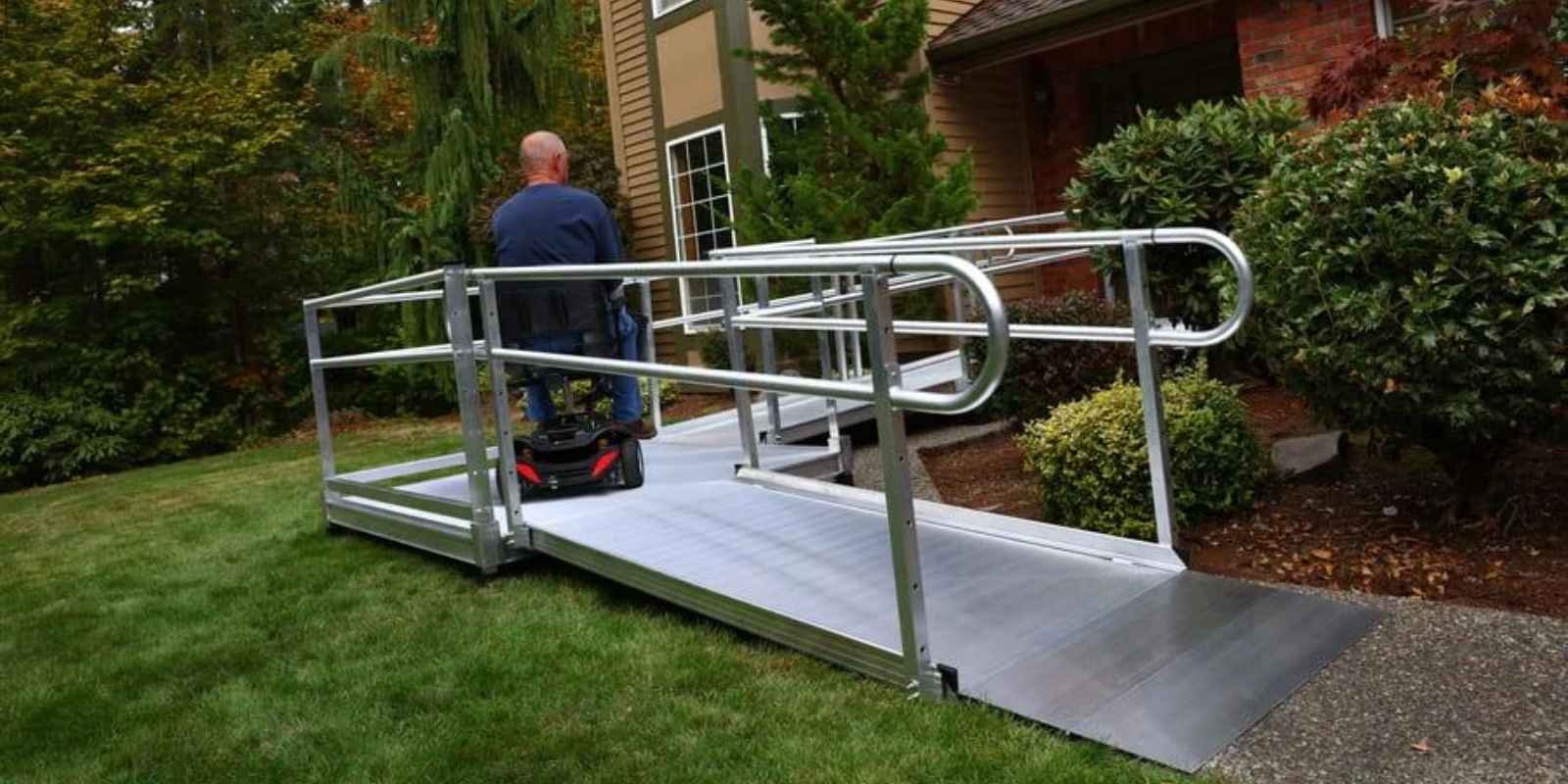
Aluminum ramps usually come with an open mesh walking surface. Rain drains straight through it, rather than pooling on the top. Snow falls through it as well, and the surface still grips well when wet. It still needs clearing after snow. Far less builds up on it in the first place though.
Concrete is a flat, solid surface, so water sits on it and then freezes. That creates a very real ice risk on any slope. Salt is the usual answer to that. Unfortunately salt damages concrete over time and causes the surface to flake. Repeated freezing and thawing does much the same thing. A broom finish or a non slip coating helps here. Both of those need renewing every few years in order to stay effective.
Maintenance Over the Years
Neither option is high maintenance, but the two age in different ways. Knowing what to expect helps you plan and budget for it.
Aluminum simply does not rust at all. It never needs painting, sealing, or any kind of treatment. Realistically the whole job is checking the bolts once a year and keeping the surface clear. A well made aluminum ramp lasts twenty to thirty years with very little attention. That is a good deal longer than most people expect.
Concrete lasts a long time as well, but it is not maintenance free. Cracking is the most common issue, usually caused by ground movement or by freezing. Sections can also settle unevenly. That creates lips which are genuinely dangerous on a ramp. Sealing does help here, and it should be repeated periodically. Repairs to concrete are also harder. You often cannot fix one section without disturbing the one alongside it.
What Your Yard Will Allow
The ground you are building on decides far more than most people expect. Have a proper look at it all before choosing either option.
Concrete needs excavation, and footings that reach down below the frost line. Tree roots, buried utilities, soft ground, and a steep slope all complicate that work. Older properties often have surprises waiting underground. Every complication adds both cost and delay to the job.
Aluminum ramps instead sit on adjustable footings or on small ground pads. They handle uneven ground easily, because each support can be set to its own height. Much less digging is involved. Existing landscaping and planting are far more likely to survive. On a tight city lot with a small front garden, that difference really matters. Many row houses have very little open ground to work with.
Permits, Landlords, and Historic Districts
Paperwork is the part that almost everybody forgets about. It is worth asking early, because it affects the timeline more than the build itself does.
A concrete ramp counts as a permanent structure in most places. It usually needs a permit. It may also have to satisfy setback rules about how close you can build to a boundary. In a historic district, the appearance of anything permanent can be reviewed. That process takes real time.
Aluminum ramps often face a lighter process. This does vary by area, so you should still check first. Because they are removable, they tend to be treated more leniently. Some areas have specific allowances for temporary accessibility equipment. For renters, aluminum is usually the only realistic option left on the table. Always confirm the position before ordering anything at all. A single phone call now saves a real problem later.
Conclusion
Choose aluminum if you need it quickly, or if the need might be temporary. It also wins if you rent your home, or if your yard is awkward to dig. Choose concrete if the need is permanent and you own the home. It suits people who want it to look built in, and who have the time to wait.
Wheelchair Ramp DC installs both types, and will tell you straight which one suits your own situation. Our team offers modular aluminum ramp installation, custom concrete and wood ramps, and free site assessments right across the area. We will explain all the trade offs before you commit to anything.
Get in touch and we will come and look at the property with you. Half an hour on site usually settles the whole question completely.